



Updated November 2026
The recall percentages of 75% to 90% attached to guerrilla marketing have no traceable origin. A real field experiment on 2,464 passers-by found that surprise draws attention, which is the part of the idea that matters for anyone who works in front of a crowd.
The crowd is the medium
An act, a parade float, a fairground, a corporate party: for people who work with crowds, surprise is a daily tool. So it is reasonable to ask whether researchers have measured it. They have, though less than the web suggests. The figures repeated online, 75%, 84%, 86% or 90% of viewers remembering an unconventional stunt, come with no link to a study, and we found no original. We leave them out.
What we can offer are pages we opened, each with its year and limits.
Observing real passers-by
What was done
Hutter and Hoffmann (Journal of Retailing, 2014) ran a field experiment with three kinds of ambient media, designed to create different levels of surprise. The team recorded 2,464 passers-by, collected 305 survey responses and examined sales figures over 730 days.
What it reports
According to the abstract, surprising ambient media attract attention, improve attitude towards the ad and encourage word of mouth. The authors also report higher purchase intention and sales revenue, and say the pattern held across time of day and weather. They describe two routes: surprise amplifies the evaluations that accompany it, and attention interacts with the resolution of an incongruity, the small puzzle a surprising object poses.
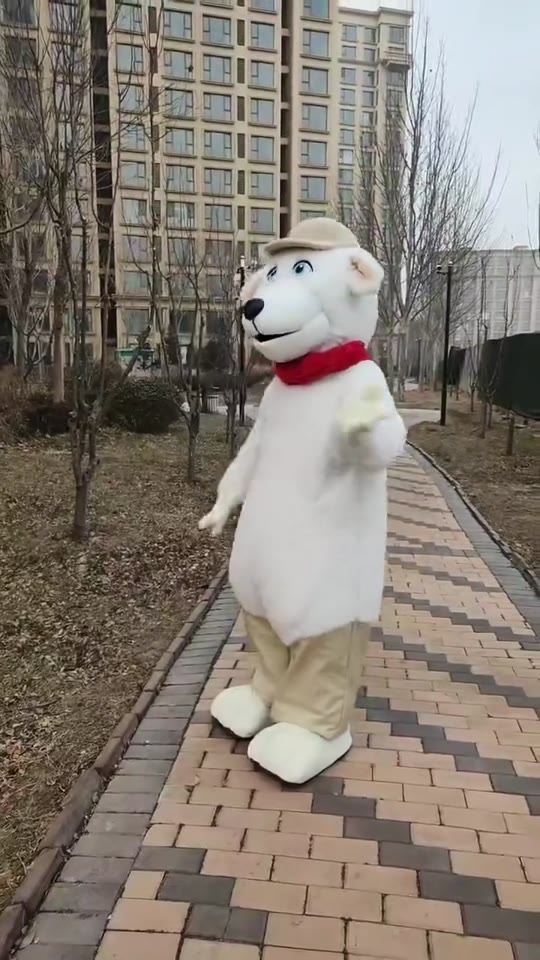
The incongruity point is relevant to character work. A large, friendly figure where none is expected creates exactly that small puzzle. The experiment, however, did not use costumed characters. It tested promotions for a retailer, and one study is one study.
The state of the audience matters
A paper in Frontiers in Psychology (2014) is not about guerrilla marketing, and we say so plainly. Two eye-tracking experiments with 36 participants each measured blood alcohol level and brand recall. Drinking one or two beers lowered cued brand recall from 40% to 36%, and heavy intoxication to 17%. The ads were conventional screen and magazine formats. The authors do mention ambient advertising in bars and pubs as motivation.
Why mention it here? Because a show at a late-evening venue or a festival field is not a lecture hall. Recall figures from sober, seated panels cannot be borrowed for a crowd at the end of the night. Treat any percentage with that in mind.
Interviews, social media and the word of mouth question
A 2014 thesis from the University of Malta based on fifteen in-depth interviews found that people called such ads surprising and creative, and said they awakened curiosity, without necessarily buying. A 2016 dissertation using a student web questionnaire found emotional appeal to have the strongest positive influence on attitude to the ad, attitude to the brand and purchase intention.
On sharing, a 2018 review of social media guerrilla tactics describes buzz and viral spread as strengths of the format, though our access was limited to the abstract and no sample is given. A show whose best moment is filmed by the audience is a case in point, but the review does not quantify it.
The benchmark from Ignition, at least 50% recall for a successful campaign, is unsourced, and we saw it only through search results.
A note on repetition and the second visit
Surprise has a half-life. The experiments cited measured a first encounter, and nothing in them says what happens on the fifth. A fairground operator knows this already: the same trick on the same corner stops drawing a crowd. A character that recurs is therefore a different proposition from a surprise stunt, and the research on surprise only partly applies to it.
One workable approach is to vary the setting while keeping the figure constant: a new entrance, a new prop, a new partner in the scene, always the same face. Keep a simple log of dates, venues and crowd reactions, so that after a season you can say which appearances worked, using your own observations rather than a borrowed percentage.
Limits and method
We opened each source and report only what its page says. The retail experiment concerned shops. The Maltese work uses small or student samples. The alcohol study used conventional ads and 36 volunteers per experiment. None examines a performer, a costume or a live show, and none supports a figure for how many people remember a character after an event. Surprise is also perishable: a stunt repeated in the same square loses the incongruity that made it work, a point the studies suggest but do not test.
What this means for shows, animations and a headline character
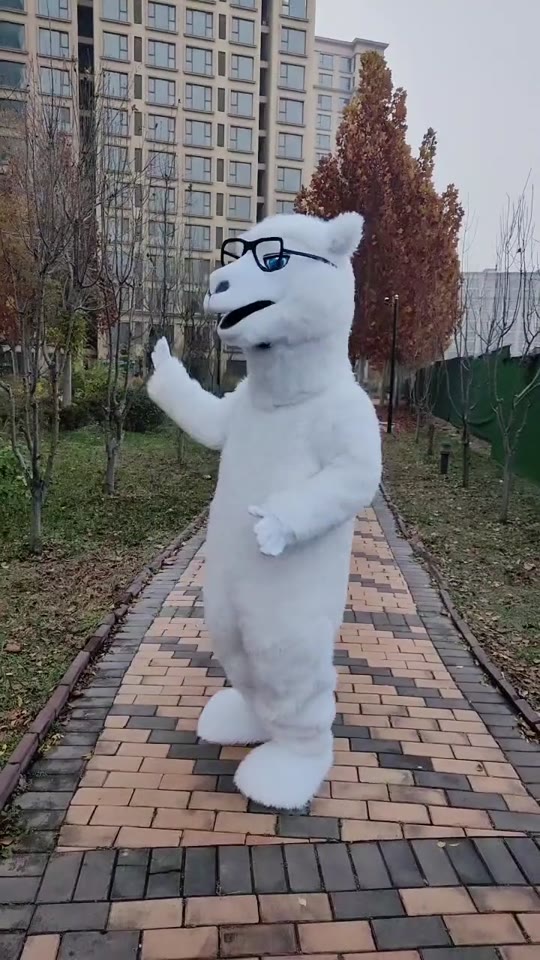
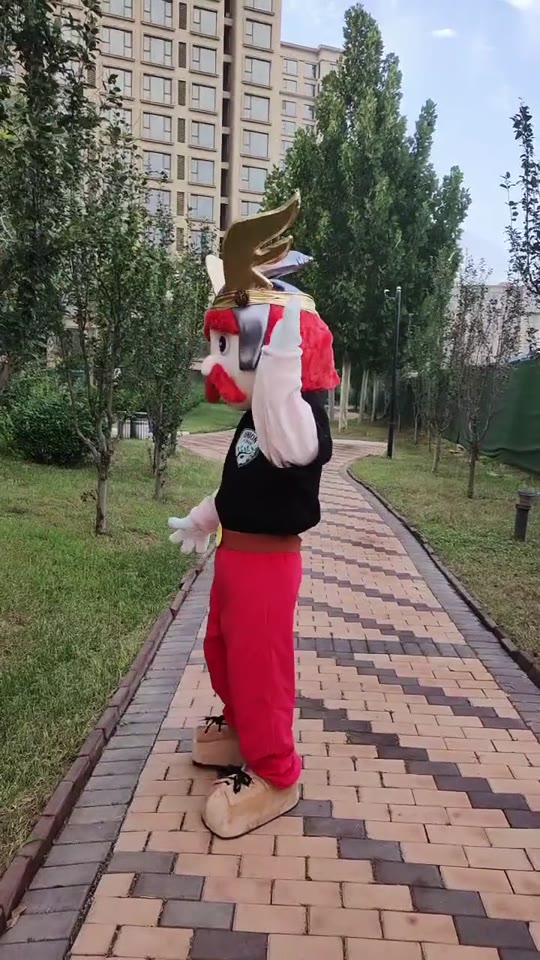
A recurring character gives an organiser something a one-off prop cannot: a face that returns. Seen at the parade, then at the funfair, then on the poster, the figure can become the star of the season. That is a reasoned guess, and it should be tested.
Build the appearances like a short programme. Plan an entrance with a small surprise, a moment where the crowd can respond, and a photo point, since the word of mouth finding concerns what people tell others. Keep sequences short, because the wearer works in heat and limited vision, and keep a handler near for safety around children.
- Count photos taken at the photo point over a fixed ten minutes.
- Ask the stage manager which moments drew the biggest reaction.
- Compare queues for the character with queues for a static stand.
Sources
- Hutter and Hoffmann, Journal of Retailing, 2014
- Orquin and colleagues, Frontiers in Psychology, 2014
- University of Malta thesis (da Costa), 2014
- University of Malta dissertation (Muscat), 2016
- Schiniotakis and Divini, Journal of Digital & Social Media Marketing, 2018
Frequently asked questions
Do any studies measure surprise in a real crowd?
Yes, a 2014 Journal of Retailing field experiment observed 2,464 passers-by and surveyed 305, but it concerned retail promotion, not live shows.
Is there a trustworthy percentage of people who remember a stunt?
No general figure is established. The values of 75% to 90% have no traceable origin.
Does the time of day matter?
The retail experiment reports its model held across time of day and weather. A separate 2014 study found alcohol lowers brand recall, from 40% to 36% after one or two beers and to 17% when heavily intoxicated, using conventional ads.
Does being surprised make people share?
The experiment reports encouraged word of mouth, and a 2018 review presents buzz and viral spread as strengths, without measured figures in the abstract.
How can an act measure the effect of a character?
Count photos, compare queues and note which moments drew reactions, repeating at each event.
Read also
- Screens, streets and live crowds: where advertising money moved in 2025
- The street as a stage: 2025 out-of-home figures for shows, fairs and crowd animation
- Shows, crowds and a star character: what the studies measured
- The headline character: what studies of children, cereal boxes and crowds offer show organisers
- Making a star of a costume: what the Duolingo owl shows about crowds and live characters
- Shows, crowds and a star character: the research behind live brand moments
- Crowds, shows and a star character: which numbers you can trust